
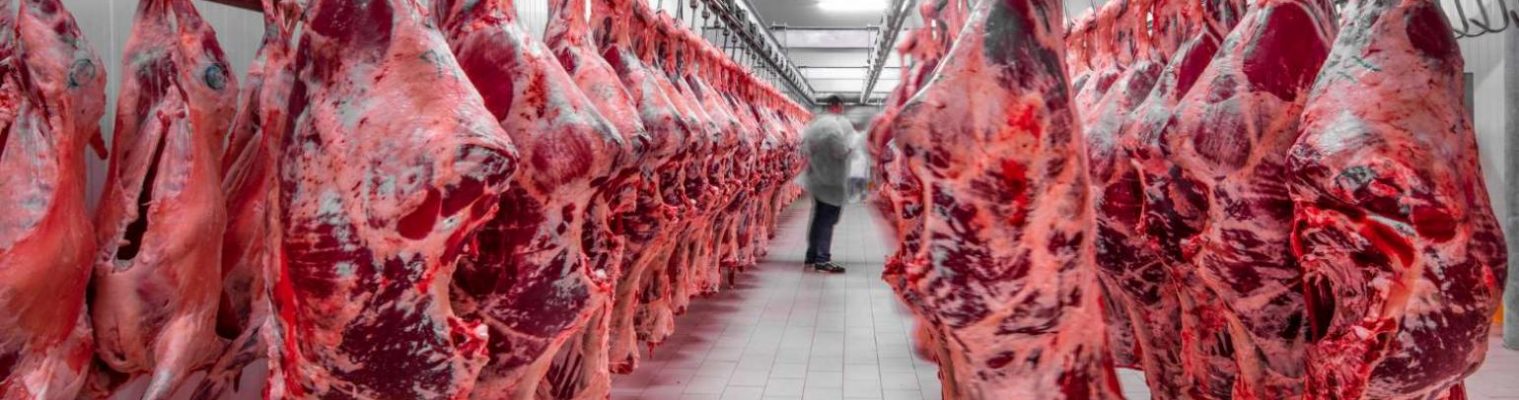
In order to health and economic extraction of meat and proper use of livestock products and their principal supply to consumption centers, it is necessary to develop a specific executive system for industrial slaughterhouses and the establishment of slaughterhouses. The following are the relevant criteria provided by the veterinary organization.
Slaughterhouse technical criteria
1- In terms of the location of the slaughterhouse, it should be built in a place where slaughter animals can be easily transported to that place in terms of communication routes.
2. The slaughterhouse should be built in an environment where there is access to safe and hygienic water.
In addition, the slaughterhouse should be located away from contaminating centers such as storage or disposal of animal waste and excrement.
3- The slaughterhouse must be equipped with a sewage system in accordance with standard standards.
4- The water used in the slaughterhouse must be in accordance with the characteristics of the country’s drinking water and in terms of health approved by the competent authorities. Air resources are required for water storage.
5. Non-potable water can also be used for steam generation, freezing and firefighting operations, provided that the piping is separate and marked.
6- The slaughterhouse should have three industrial phases of electricity and there should be enough light in its hall.
7- Work tools should be anti-paint and easy to clean.
8- The roof of the halls should be insulated against heat and moisture.
9- The walls of the halls should be covered under the cement roof with a smooth and impenetrable surface and their color should be as light as possible.
10- The floor of the halls should be made of concrete and should not be slippery.
11- Necessary equipment must be installed for heating or cooling and ventilation of the halls.
12- The use of copper and lead and their alloys in places where it is possible for these materials to come into contact with meat and fat is not allowed.
13- Equipment and parts of machines that are in contact with meat and fat, should be made in such a way that they can be easily separated and cleaned.
14. The slaughterhouse hall should have a slope of two percent towards the reputation.
15- It is necessary to have enough baths, showers and toilets in the slaughterhouse.
16. Workers must have a health card and wear a special gown when working.
17- The equipment and construction of slaughterhouses should be in such a way that it is not possible for birds, insects and rodents to enter it.
18- In order to wash and disinfect the means of transportation, a place should be considered.
Criteria for issuing establishment licenses for slaughterhouses
A- Capacity: The minimum and maximum capacity are determined according to the needs of the region and the proposal of the provincial commission and with the approval of the central commission.
B- Land: The minimum land area required for the construction of the slaughterhouse should be three times the area of the infrastructure of its buildings.
C- Plan and plan: In order to issue an establishment license, it is necessary to submit a plan and plan by the applicant.
In the following, a sample of slaughterhouses is presented in order to get acquainted with the applicants. This guide can help applicants in preparing the desired plan, but in any case, the plan of industrial slaughterhouses must have the following specifications:
1- The wall of the livestock waiting stalls should be made of 1.2 to 2 meters of cement floor from the floor of the hall and its floor should be made of impermeable materials.
2- The height of the drinking fountain in the livestock waiting stalls should be between 30 to 50 cm.
3- In the preparation hall of animal products, the necessary equipment such as brewing pots, horns and hair cleaners for preparing the head and tail, watering machine, intestinal cleaning machine for preparing the intestines, special trays and base hooks for carrying and hanging Heart and liver are available.
4- The construction of sewers and canals for internal transportation, etc. should be installed in such a way that they have a suitable slope and their cleaning is easy.
5. Separate transmission gutters should be considered for each of the salons related to skin, intestines, offspring, cleansing water and heart and liver.
6- In order to separate and keep suspicious animals, it is necessary to have a locking place in the slaughterhouse.
7- In order to freeze the meat infected with the parasite, it is necessary to have a separate and special cold storage in the slaughterhouse.
8- In order to provide veterinary services, it is necessary to have a specially equipped room in the slaughterhouse.
9- The equipment of the slaughterhouse should be proportional to the number of slaughter animals, working hours and the number of workers, which includes the following items. Anesthesia equipment, cranes, air compressors and related equipment, hooks, chainsaws, car wash showers, scales, carts, trays, sterilizer tables, slaughter tools, steamers, carcasses and meat carriers.
10- If peeling is done on a stretcher (cradle), its material should be anti-paint and its height should be such that the carcass does not come into contact with the ground.
11. Slaughterhouses must be equipped with waste conversion equipment or waste conversion program, the above part must consist of the following facilities:
Receipt section: In this section, livestock recording carcasses and slaughterhouses of livestock and poultry are dumped into a cooking pot by a lift. The blood is pumped to the tank and from there to the cooking pot.
Baking part: In this part, the ingredients are steamed and then dried.
Lubrication section: After the recording materials and waste are cooked in the boiler, they are directed to the lubrication section, where they are lubricated and their oil is stored in the oil tank. The rest of the material is pushed to the shredder.
Shredder: In this part, the material is crushed by a mill and then dried and becomes meat powder, blood powder and bone powder.
Packing part: In this part, the powdered materials, after adding antioxidants, other additives needed separately are poured into bags and transported to the warehouse.
D- Distances: Observing the distance in relation to livestock and similar and dissimilar units as well as residential areas, installation tolls for the contents listed in the table, distances are mandatory.
Criteria for issuing exploitation licenses for slaughterhouses
Issuance of exploitation licenses for animal feed factories, cold storages, slaughterhouses and slaughterhouses is done in coordination with the General Directorate of Industries and the Jihad Construction Organization of the province and related units. In all the above cases, the issuance of a health license will be done in accordance with the law of the Veterinary Organization, and without a health license, it is not possible to set up and operate the mentioned units.
Estimation of slaughterhouse capacity
Choosing the right capacity and production plan for industrial units, in addition to the optimal utilization of the investment made, is a factor for greater profit. The creation and development of industrial units requires initial investment. Therefore, the selection of very small capacities calls into question the profitability of the project. In addition, the choice of high capacities causes the need to invest in the supply of machinery, which, if the investment is unreasonable, again makes the profitability of the project difficult. Therefore, determining the appropriate and optimal capacity in project investment is very important. Therefore, according to the above and according to the methodology of feasibility studies, the following basic factors are used to determine the project capacity.
- Determining the capacity based on the opinion of the project implementation applicant
- Capacity determination based on the results of market studies
- Capacity determination based on normal capacity of machines and production line
- Capacity selection based on availability of raw materials
- Capacity determination based on financial and economic justification
No comment